Employers should value what their employees do outside of work SO MUCH MORE
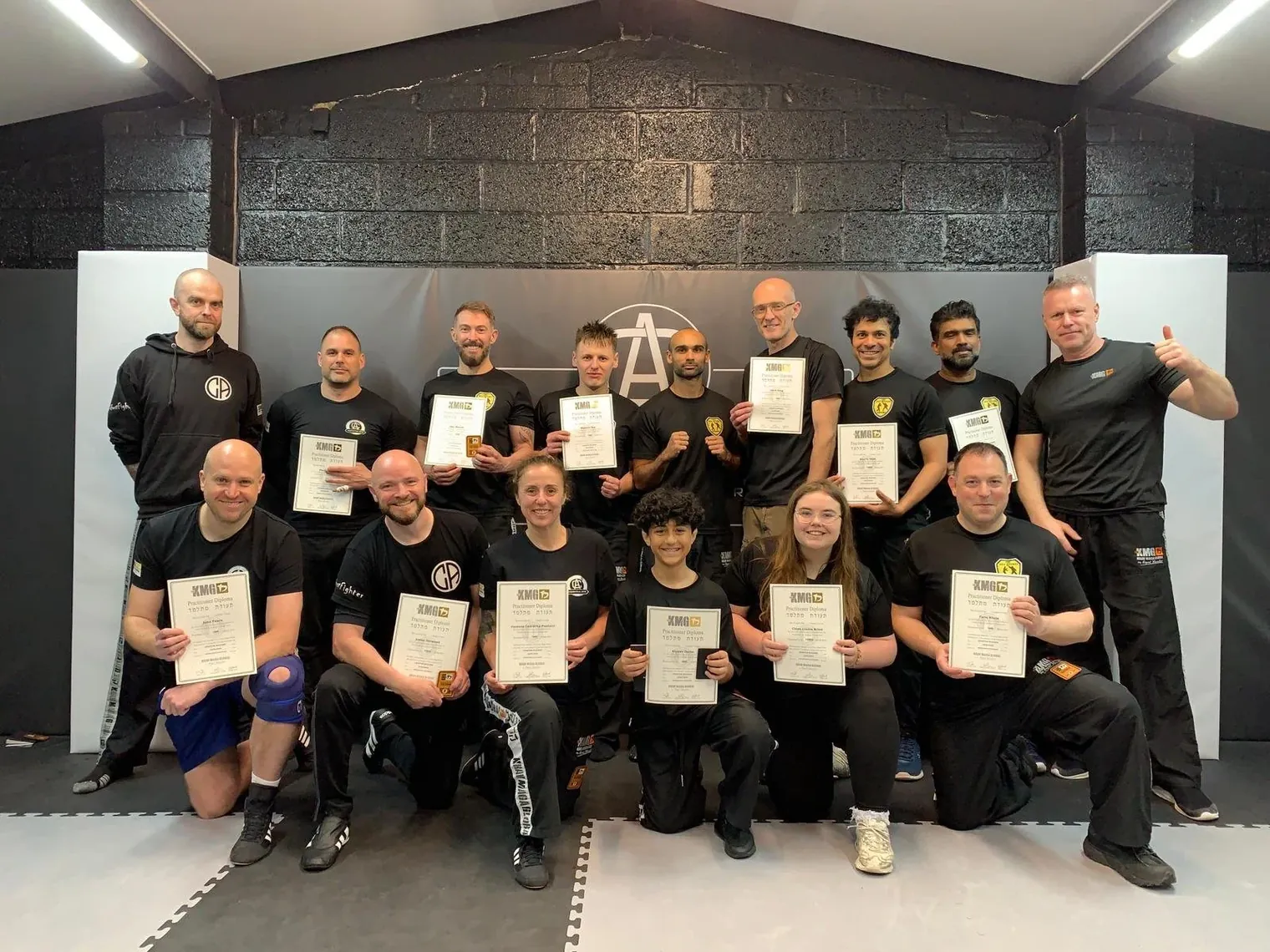
On Saturday I achieved P1 grading in Krav Maga.
Martial arts is by no means something that comes naturally to me. I move more like a rhino than a ninja. When I first started learning, it was purely for utility - I wanted to learn how to defend myself, my family and maybe even other members of the public. But over time the act of taking part has become a pleasure in itself - if you like a shift from an extrinsic to an intrinsic reward. A great instructor and group really helped.
Building Neural Estate
When you build skills, struggle turns into reward. Activities that require focus and deep concentration are highly valuable and grow an area of your brain called the Anterior Mid-Cingulate Cortex which is associated with goal directed behavior, willpower and motivation.
Generating Flow
In addition, once you exit the struggle phase and reach a certain level of mastery, you trigger flow states. Mastery is a flow trigger, but so is novelty and challenge, provided the skills challenge balance is right, you get better, you up the stakes, you generate more flow, a virtuous circle.
Harvard University research found 3 days of heightened productivity post Flow states. So what you do outside of work sends positive ripples into work. Yvon Chouinard, founder of Patagonia, famously allowed his employees to go and catch the waves whenever the surf was great, regardless of any deadline, because he knew he would be rewarded in loyalty and the positive bow wave of creativity and productivity post surfing flow state.
High risk, high stakes activities are good flow triggers, e.g. rock climbing, but then so are less risky ones like music - good musicians jamming together brings novelty, challenge, autonomy, instant feedback - all flow triggers.
Even less difficult activities like jogging and reading create mild flow and the latter, if we are reading a moderately challenging book, improves our focus and concentration.
Releasing stress
Returning to martial arts, Eyal Yanilov one of the world's most prominent Krav Maga instructors teaches Krav Maga in companies. He uses light physical activity coupled with mindset discussions to help executives and managers handle stress, resolve conflict and strengthen self-confidence. Adrenalin is useful when someone challenges us on the street but less useful in a sedentary job where it literally eats us from the inside without an outlet.
So if challenging physical and mental activities improve focus and concentration, increase creativity and productivity, make us more calm and balanced and give us more self-confidence then why on earth aren't employers more interested in
- What job applicants do outside of work (aside from TV, shopping and scrolling)?
- Creating a compensation structure that rewards such activities?
I'm interested to hear if and how your company incentivises such activities.
This post was written by Mark A King. You can follow him here: https://www.linkedin.com/in/markkingbravo/ (opens in a new tab)