The UK doesn't have a talent shortage. It has a recruitment experience problem.
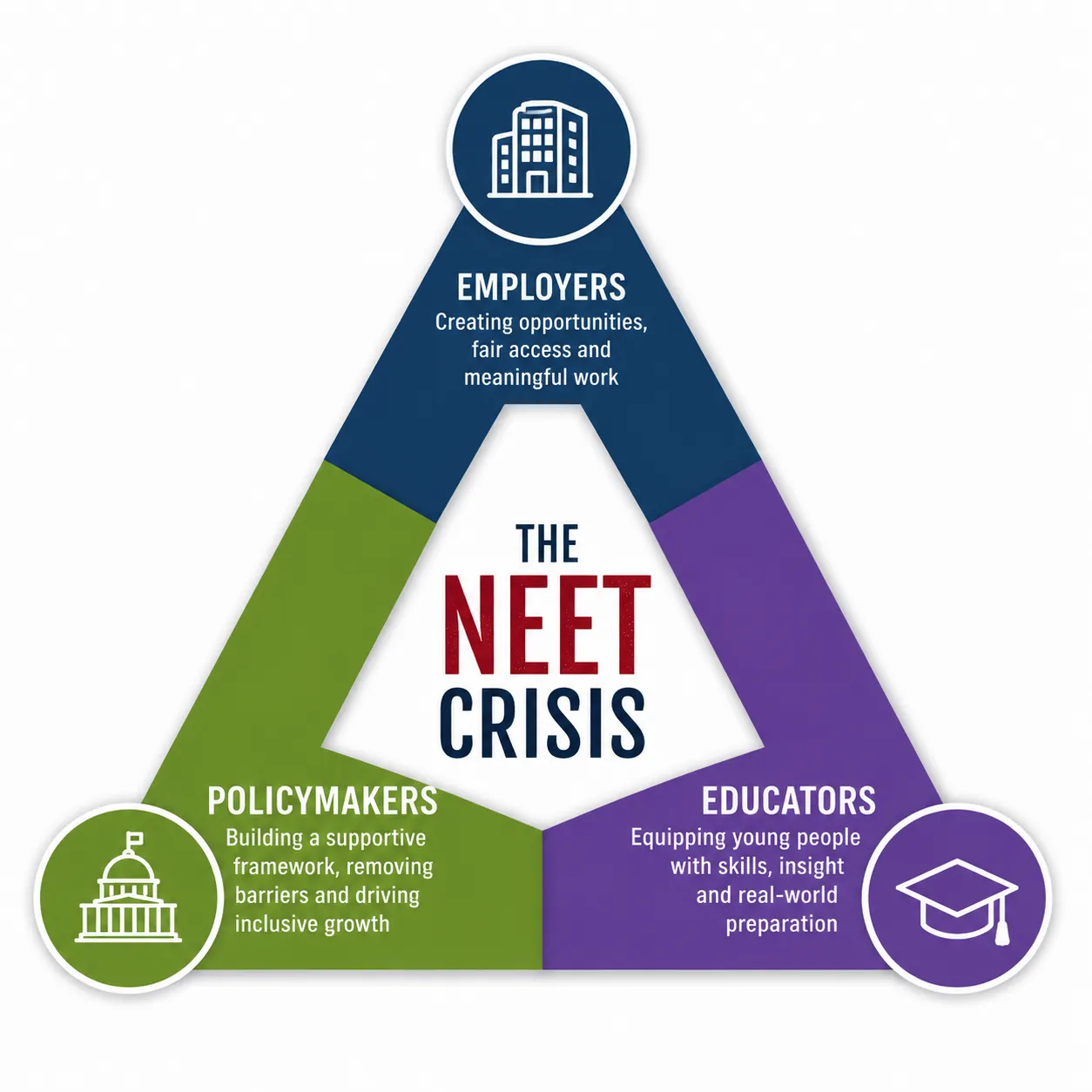
This article has been brewing for a while and, while I prefer to write about things in a positive tone, this one is hard to sugar coat.
As an experienced older job seeker, my perspective may be different but I have witnessed first-hand much of the pain and frustration that the today's generation of NEETs, graduates and job seekers are experiencing.
The problem of every job demanding previous experience is very unwelcoming for first timers and for those that want to pivot. With all the disruption we're starting to see and can expect from AI, people WILL need to re-skill but I don't feel like there's any reward or recognition for those that have.
My experience from the last 3 years is a job market currently presents itself as - CONSERVATIVE, ANTIQUATED, INHUMAN, INFLEXIBLE, UNREALSITIC and LACKING TRANSPARENCY
Having faced redundancy and in the bests interest of my long term employability, deciding to pivot, I hoped that transferrable skills combined with newly acquired skills and knowledge would demonstrate initiative and a commitment to personal growth, but after over 2 years and several hundred job applications the process created no opportunity to demonstrate this.
While I have decided to do my own thing, I still felt I had much to offer the job market and still do. But like a type cast actor, I received a very clear verdict, firmly closed doors and no feedback on what to improve on.
I worry about the effect this has on 100s of young people who may have been out of work for a long time - we saw the effect it has on their confidence and wellbeing in young men in Gareth Southgate's documentary 'Changing the game for young men'
Endless 'Dear John' emails are demoralising. And then there's the 'we expect to receive such a high response rate that we can't respond to every applicant.' So as an applicant, you get no feedback and get ignored by companies that can't even be bothered to respond to an application that may have taken several hours of YOUR time.
Others will respond within minutes, including a company that I shall not name and shame, but prides itself on being a values led business: I received feedback within 5 minutes and when I followed up they assured me they had reviewed my application, and cover letter.
COMPANIES NEED TO STOP USING AI TO REPLACE HUMAN JUDGEMENT.
Because guess what, applicants can play that game too - it’s a vicious circle and it's DEHUMANISING the entire process, meaning companies are awash with AI generated applicants with uninspiring homogeneous cover letters.
With it being so easy to post reviews on Glassdoor now, applicants that have a bad application and interview experience WILL WRITE REVIEWS. And guess what, people WILL READ THEM, especially Gen Z, who like no generation before, want to work for a values led business and will judge you on your conduct before they enter the workplace.
Companies also need to be MORE TRANSPARENT ABOUT PAY and MORE PRAGMATIC about the desired skill set of the candidate. Many job descriptions are so off-putting with the long wish list of skills and experience that they are basically saying if you do not have relevant experience in this industry, do not apply. And we all know what echo chambers sound like.
Someone who's done the role before brings their own biases and blind spots and there is a danger of complacency and apathy. Someone told me the other day that in the US, it's the exact opposite, employers question why someone would want to apply for a role they've done before rather than challenging themselves.
We perform best at an optimal point between skills and challenge, but I fear that too many employees are stagnating as employers play it safe breeding boredom, apathy and disengagement, leading to a pandemic of lost purpose, under-fulfillment and burnout which is costing companies in creativity, innovation and productivity.
And then there's the long onerous job applications, where you have to list all your job roles and education on a form, designed purely to reduce the number of applicants coming through. Only the most gritty get through these but they are totally pointless as you are often just copy pasting questions of a CV or more and more candidates are asking LLMs to answer the questions.
Employers also need to WAKE UP TO THE FACT THAT 9 to 5 Monday to Friday IS DEAD
The gig economy is here and employers need to be more flexible. Employment is not what it used to be, with 50% of firms less than 5 years old, falling real wages, and worsening pensions, then the balance of power has shifted away from the employer. Young people are EXPECTING another major disruption like a pandemic, economic turmoil, environmental disaster or AI dystopia. Their view of leadership is tainted by world leaders with poor morals that create global chaos and uncertainty and of company bosses, who predominantly put profits before employees, society and the environment.
They are therefore insulating themselves against future events like these and don't want to put all their eggs in one risky basket. Above all they want financial security, personal growth and meaningful work but few employers are offering this, so they are going it alone, many ventures are just solopreneurships to support the high cost of living rather than something scaleable as they realise they can make money on the internet in the safety of their bedroom without all the office politics.
THE CV IS A VERY BLUNT INSTRUMENT.
Why are employers still only looking at CVs which tell you so little about a candidate? Gen Z are creators and are used to the idea of a personal brand as they have grown up on social media, for better or for worse.
Few companies ask you for your LinkedIn or other social media profiles where you can learn far more about someone than what's on a CV.
Why not ask candidates to record videos of themselves in response to application questions? - very few companies do this. Octopus Energy is an example of one that does, and also recruits heavily through careers fairs and other event which you can go along to and secure yourself a job there and then.
So in conclusion, I have every sympathy for young people who have lost faith in the future. Here's an idea - why not ask your new Gen Z hires for their experience of the recruitment and onboarding process and their suggestions for making it more inclusive, fair, welcoming and a better gauge of a candidates skills, strengths and personality.
It will cost you very little and will strengthen your appeal to younger generations which is very good return on investment. Because bad hiring = bad PR and Marketing
This post was written by Mark A King. You can follow him here: https://www.linkedin.com/in/markkingbravo/ (opens in a new tab)